Crypto payments let you send value directly from one digital wallet to another over a blockchain, with no bank or card network in the middle — the distinction that matters is between a raw wallet-to-wallet transfer, which is irreversible and settles on-chain in minutes, and a payment gateway like BitPay, which adds invoicing, fiat conversion, and refund logic on top. Pick the wrong one and you either eat the volatility or lose a dispute you can't win.
TL;DR:
- Crypto payments settle wallet-to-wallet on a blockchain; no bank clears the transaction, so confirmations, not business days, decide when it's final.
- Stablecoins and the Bitcoin Lightning Network are the two options actually built for payments — holding volatile BTC or ETH on-chain for everyday sales is a mistake most merchants regret.
- A crypto payment gateway, BitPay being the best known, adds invoicing, address generation and fiat conversion that a bare wallet simply can't do.
- "Free" crypto payments still cost you in network fees, FX spread, or a subscription tier — nothing moves on a blockchain for nothing.
- El Salvador made Bitcoin legal tender in 2021; a National Bureau of Economic Research study found usage collapsed once the sign-up bonus ran out, proof that legal status alone doesn't create adoption.
Table of Contents
- How Crypto Payments Actually Work, From Click to Settlement
- Which Crypto Coins Are Actually Built for Payments
- How to Pay Someone With Bitcoin, Without the Guesswork
- What a Crypto Payment Gateway Does That a Wallet Can't
- The Disadvantages Nobody Puts in the Pitch Deck
- "Free" Crypto Payments and the Best Apps: What You're Really Paying
- Legal Tender Didn't Mean Adoption: The El Salvador Lesson
- Get a Payment Stack You Actually Control
- Frequently Asked Questions
- Sources
How Crypto Payments Actually Work, From Click to Settlement

A crypto payment is a direct transfer between two wallets, recorded on a public ledger instead of cleared through a bank. There's no card network authorizing the charge and no 2-3 business day hold — the sender broadcasts a signed transaction to the network, miners or validators confirm it, and once it's buried under enough blocks, it's final. That's the whole mechanism. No intermediary approves or denies it, which is also why nobody can reverse it once it's through.
Speed depends entirely on which chain you're using. Bitcoin produces a new block roughly every 10 minutes, and most exchanges want one to six confirmations before they credit a deposit, so a basic Bitcoin payment can take anywhere from 10 minutes to an hour to feel "safe." Ethereum blocks land faster, around every 12 seconds, but congestion still slows things down. The Lightning Network, built on top of Bitcoin, skips all of that and settles in seconds — which is the real answer to why some crypto payments feel instant and others feel like watching a kettle boil.
Which Crypto Coins Are Actually Built for Payments
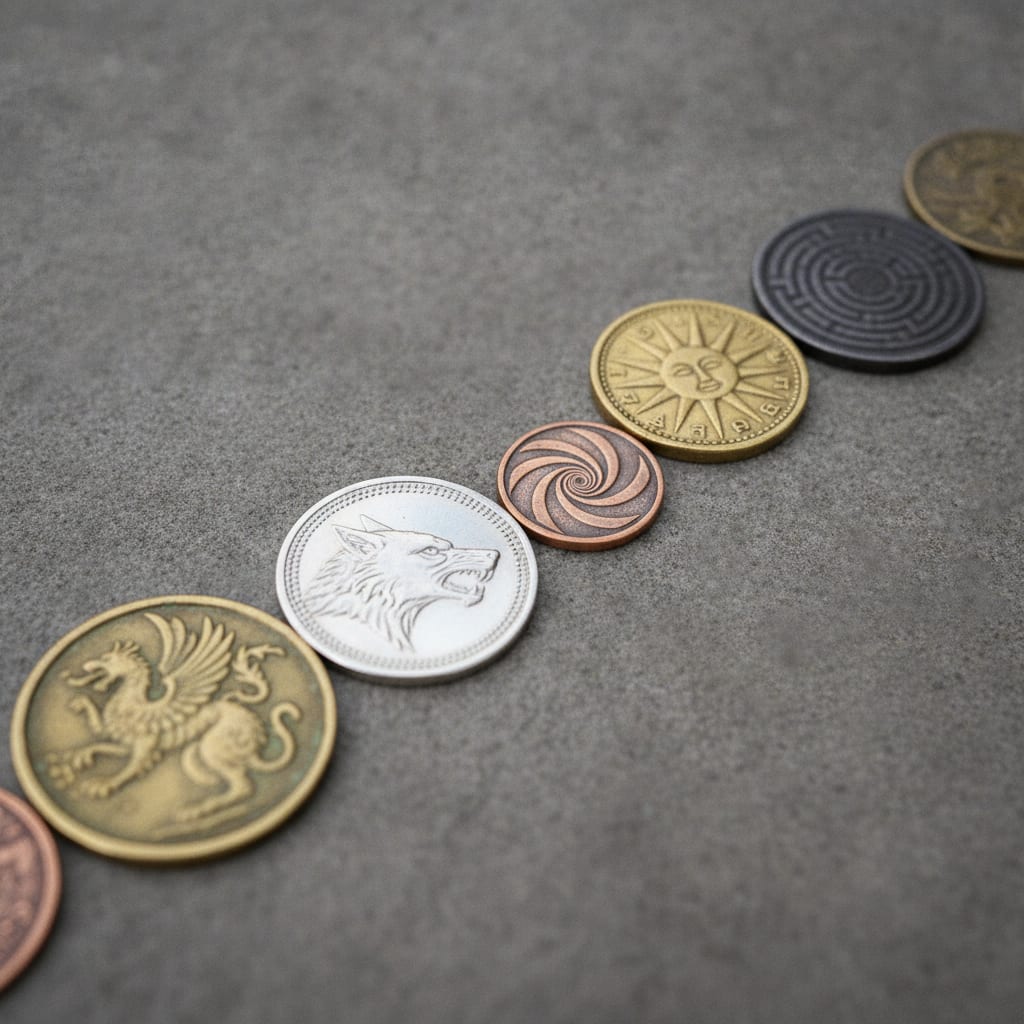
Most of the coins people ask about were never designed to be spent — they were designed to be held. For actual payments, the field narrows fast.
| Coin / Rail | Settlement Time | Fee Behavior | Best For |
|---|---|---|---|
| Bitcoin (on-chain) | ~10 min per block, 1-6 confirmations typical | Spikes hard during network congestion | Large, infrequent transfers where speed isn't urgent |
| Bitcoin Lightning Network | Seconds | Fractions of a cent | Tips, micropayments, point-of-sale |
| USDC / USDT (stablecoins) | 1-5 min depending on chain | Low and predictable | Invoicing, payroll, merchant settlement |
| Ethereum (ETH) | ~12 sec per block, gas highly variable | Can exceed the payment itself during congestion | Smart-contract-linked payments, not everyday retail |
| Litecoin | ~2.5 min per block | Consistently low | Faster Bitcoin-style transfers, thinner merchant support |
If you're asking which coins are best for payments, the honest answer skips the coins with the biggest market caps. Stablecoins win for merchants who need to know exactly what they're getting paid, because the dollar value doesn't move between invoice and settlement. Lightning-based Bitcoin wins for speed and micropayments. Holding volatile Bitcoin or Ethereum on-chain as your payment rail is the choice that looks modern and performs poorly the first time the market drops 8% between checkout and settlement.
How to Pay Someone With Bitcoin, Without the Guesswork

Paying someone in Bitcoin is simpler than people expect, and that's exactly why mistakes are costly instead of annoying. The steps are: get a wallet (software or hardware), obtain the recipient's address or scan their QR code, enter the amount, choose a fee tier based on how fast you need it to confirm, and broadcast. From there you wait for confirmations — one is usually enough for a coffee, six is the standard a lot of exchanges require before crediting a large deposit.
Pro Tip: Before sending a large amount, send a test transaction of a few dollars first and confirm the recipient actually received it. Crypto transactions have no "undo" button, and sending the wrong asset to the wrong network — USDT to a Bitcoin address, for instance — doesn't bounce back. It just disappears.
1 to 6 confirmations. That's the entire range most exchanges and merchants use to decide whether a Bitcoin payment is safe to treat as final.
What a Crypto Payment Gateway Does That a Wallet Can't
A wallet holds keys and lets you send or receive. A crypto payment gateway sits on top of that and does the parts a retail business actually needs: generating a unique address per order, displaying a countdown before the exchange rate locks, converting incoming crypto to cash or stablecoins automatically, and feeding the sale into your accounting software. BitPay is the name most people land on first, and for good reason — it's the oldest, largest processor built specifically to let merchants accept crypto without taking on price risk, since it can settle payouts in fiat.
The trade-off is custody. BitPay and similar gateways briefly hold your customer's funds mid-conversion, which is convenient but means you're trusting a third party with that window. The non-custodial alternative is running your own instance of BTCPay Server, an open-source gateway that does the same invoicing job without anyone else touching the funds. If you're weighing whether any of this is worth the engineering time for a small operation, that's the same build-versus-buy question covered in our breakdown of what startups actually need from a consultant — the answer usually comes down to transaction volume, not ambition.
The Disadvantages Nobody Puts in the Pitch Deck
Every comparison page lists crypto's upside. Here's what gets left off, and it's the part that actually determines whether accepting crypto payments makes sense for your business.
- Volatility. A payment worth $500 at checkout can be worth $460 by the time it settles, unless you're using a stablecoin or a gateway that converts instantly.
- Irreversibility. There's no chargeback mechanism. If a customer sends to the wrong address or gets defrauded, that's final — good for merchants fighting fraud, bad for anyone who makes a typo.
- Tax paperwork. The Internal Revenue Service treats cryptocurrency as property, not currency, which means a crypto payment isn't just income — it can also trigger a capital gain or loss on whatever asset was used to pay.
- Regulatory patchwork. The Financial Action Task Force requires exchanges and payment processors to collect and share sender and recipient information above certain transfer thresholds, and that rule is implemented differently country by country, which complicates anything cross-border.
- Compliance overhead. None of the above is a reason to avoid crypto payments, but it is a reason not to bolt them on without a plan — the same logic covered in how business consulting fees actually work applies here: paying for the right structure up front costs less than fixing it after a tax season goes sideways.
The IRS doesn't see crypto as money. It sees a cup of coffee bought with Bitcoin as the sale of a property — gain or loss included.
"Free" Crypto Payments and the Best Apps: What You're Really Paying
Nothing that settles on a public blockchain is free; someone, somewhere, is paying a network fee, and "free" crypto payment offers usually mean the app is absorbing that cost temporarily or making it back through a spread on conversion. The apps worth knowing fall into two categories. Consumer apps like Cash App and Strike are built for sending and receiving, with Strike leaning on the Lightning Network for near-instant, near-free transfers. Merchant-side, BitPay's own app and dashboard remain the standard reference point, with BTCPay Server as the self-hosted option for anyone who'd rather not hand custody to a third party at all.
"Best crypto payments app" is the wrong question before you answer a simpler one: are you spending or getting paid? A consumer sending $20 to a friend has completely different needs than a shop trying to accept payment at a register without taking on currency risk, and most of the marketing blurs that line on purpose.
Legal Tender Didn't Mean Adoption: The El Salvador Lesson
El Salvador made Bitcoin legal tender in 2021, which should have settled the "will people actually use crypto payments" question for good. It didn't. A National Bureau of Economic Research study of the country's government-issued Chivo wallet found that most of the people who downloaded it to claim a $30 sign-up bonus in Bitcoin stopped using it once that bonus was spent, and cash remained the dominant way people paid for everyday goods.
Legal tender status got Bitcoin into millions of phones in El Salvador. It did not get Bitcoin into millions of actual transactions.
The lesson transfers directly to any business weighing whether to accept crypto: mandating or offering a payment method doesn't create demand for it. Demand comes from a real reason customers want to pay that way — lower fees, privacy, or access for people without a bank account — and if that reason isn't present for your customer base, the infrastructure sits unused no matter how well it's built.
Get a Payment Stack You Actually Control
Everything above points to the same decision: custodial or self-hosted. A gateway like BitPay solves invoicing fast, but it briefly holds customer funds mid-conversion — fine for most businesses, a non-starter for some. ActUpon's crypto and blockchain advisory exists for the businesses in the second group, and often points clients toward Myntli, our sister service that hosts BTCPay Server so you get the same non-custodial gateway serious merchants already trust, without running your own node.
Myntli runs on a flat monthly hosting fee rather than a cut of every sale, which matters once volume climbs. The honest caveat: self-hosting means you hold your own keys and handle your own fiat conversion — there's no support line to reverse a mistake, so check the spec sheet and your risk tolerance before you switch off a custodial gateway entirely. If the bigger question is whether crypto fits your business at all, that's a conversation worth having before you build anything.
Frequently Asked Questions
Which crypto coins are best for payments?
Stablecoins such as USDC or USDT are best for merchants because their value doesn't move between invoice and settlement, and Bitcoin's Lightning Network is best for speed, settling in seconds for a fraction of a cent. Holding volatile coins like plain Bitcoin or Ethereum as your payment rail works, but exposes you to price swings between checkout and settlement.
How does crypto pay work?
A sender broadcasts a signed transaction from their wallet directly to the recipient's wallet address over a blockchain network, with no bank or card processor involved. Miners or validators confirm the transaction, and after enough confirmations it becomes final and cannot be reversed.
How do I pay someone through Bitcoin?
Open a wallet app, enter or scan the recipient's Bitcoin address, specify the amount, choose a transaction fee tier, and confirm. The payment then needs one to six network confirmations, depending on the size, before it's considered settled.
What is a crypto payment gateway?
A crypto payment gateway is software that sits between a merchant and the blockchain, generating unique payment addresses per order, locking in an exchange rate briefly, converting incoming crypto to fiat or stablecoins, and reporting the sale to accounting software. BitPay is the most widely used example; BTCPay Server is the open-source, self-hosted alternative.
What are the disadvantages of using cryptocurrency as a payment method?
The main ones are price volatility between checkout and settlement, no chargeback mechanism if something goes wrong, tax complexity since the IRS treats crypto as property rather than currency, and a regulatory landscape that differs country to country. None of these rule out accepting crypto, but they do require a plan before you turn it on.
Is BitPay free to use?
BitPay charges merchants a processing fee per transaction rather than offering the service for free, and network fees for the underlying blockchain transaction still apply on top. Consumers using the BitPay wallet app to send or receive typically only pay the network fee, not a BitPay fee.
Sources
- Digital Assets | Internal Revenue Service
- Virtual Assets | Financial Action Task Force
- BitPay | BitPay, Inc.
- Are Cryptocurrencies Currencies? Bitcoin as Legal Tender in El Salvador | National Bureau of Economic Research